
Eureka Talk_23 Part 1
setting out

This is the first part of the talk I gave for my doctoral defense on November 18. As you can see from the title, it was version 23.
To explain: as part of my doctoral defense in Artistic Research at the Oslo National Academy of the Arts, I was to give a public 45 minute talk followed by 90 minutes of questions from the committee and the audience. And answers from me.
So this is the talk.
I’ll post the entirety of it over the next few days, leaving the “stage directions” intact and placing images and video elements as best I can. I’m putting it here because I’d like to share it and have it somewhere other than in the hidden zone of hard drives.
And yes, I passed the defense!
EUREKA TALK PART 1
SLIDE: THE WONDER: SHOW VIDEO AND TIME THE STORY TO LAUNCH
I’m in my room, been writing a letter. Had to write extra small this time otherwise it wouldn’t work. I fold it until it’s the size of a postage stamp and cover it with plastic to keep it waterproof in case of rain. I tie this letter to the string of the balloon and test it: it rises to the ceiling without faltering. That’s good. I take the string and hold it tight as we hurry downstairs.
Outside, we’re standing in front of the house, the pine tree towering above on our left. Nothing too high up to the right. Hope the wind blows that way.
I look up, mumble a little message to wish the balloon a successful journey, and let go of the string.
We watch for a long time as the balloon pulling its letter struggles toward the sky.
You hope the letter gets somewhere, that someone finds it when it lands. You imagine the balloon’s height, its float, its bounce through the clouds and wind. You can’t envision where it might go. You’d love to be with it, to soar and find a place where you felt you belonged. But you can’t.
Growing up in a small town in the corner of a Midwestern state in the U.S. I felt alien, out of place. I looked different, my culture, my upbringing was different from people around, my interests, politics and dreams were “all wrong.” I spent a lot of time reading, falling into books, floating into worlds beyond--on words. I tied letters to all the balloons I ever got at a party, a state fair, or the mall.
Eyes straining upwards. There’s nothing left to see except blue sky, or other times, clouds. It’s gone.
The note I tie to the balloon always says the same thing: Hello my name is Jenny Perlin if you find this letter please write me back at this address.
SLIDE: TITLE TALK
Hello, my name is Jenny Perlin. Thank you all for being here.
The title of my artistic research project is “Eureka.”
The balloon you just saw taking off is from my film The Wonder. It’s a scientific balloon launching in the Arctic, heading towards the stratosphere. I’m filming the launch, and so excited (I’ve also been up all night, a couple nights in a row) I keep pressing the focus button to make sure this beautiful helium-filled thing stays sharp in the viewfinder. Like the others standing around me, I gasp at the moment of its liftoff and can’t stop watching until it disappears in the clouds.
But before I get into all that, let me tell you a few things about the title.
Eureka is an ancient Greek word that means: “I found it!” It’s a spontaneous exclamation the mathematician and inventor Archimedes shouted when he made a sudden scientific discovery.
But in my research, the main reference for this word is the title of an 1848 text, something between a lecture, essay, and poem, by American author Edgar Allan Poe, in which he claimed, using poetic, scientific, and argumentative language, to have figured out, definitively, the origin of the universe.
SLIDE: POE FRONTISPIECE EUREKA
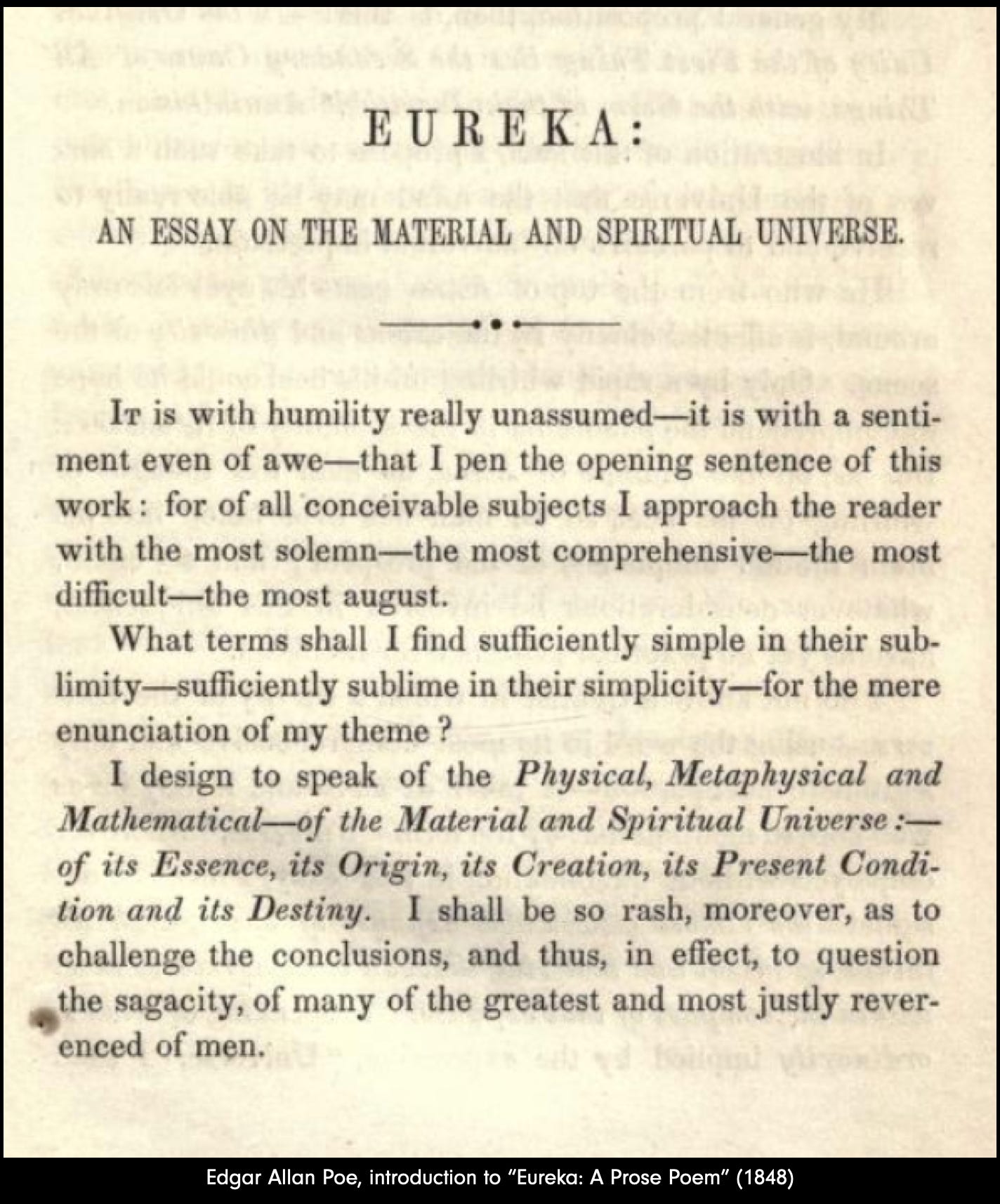
To claim “Eureka!” involves speculation, imagination, research, and chance; mixing categories, media, approaches, and methods in unique ways. Throughout my research I use the term earnestly and, sometimes, with gentle irony.
In my project, Eureka, I inquire into strategies, tools, and historical and contemporary narratives used to envision and describe so-called “inaccessible” spaces.
SLIDE: PICTURES OF STRATOSPHERE
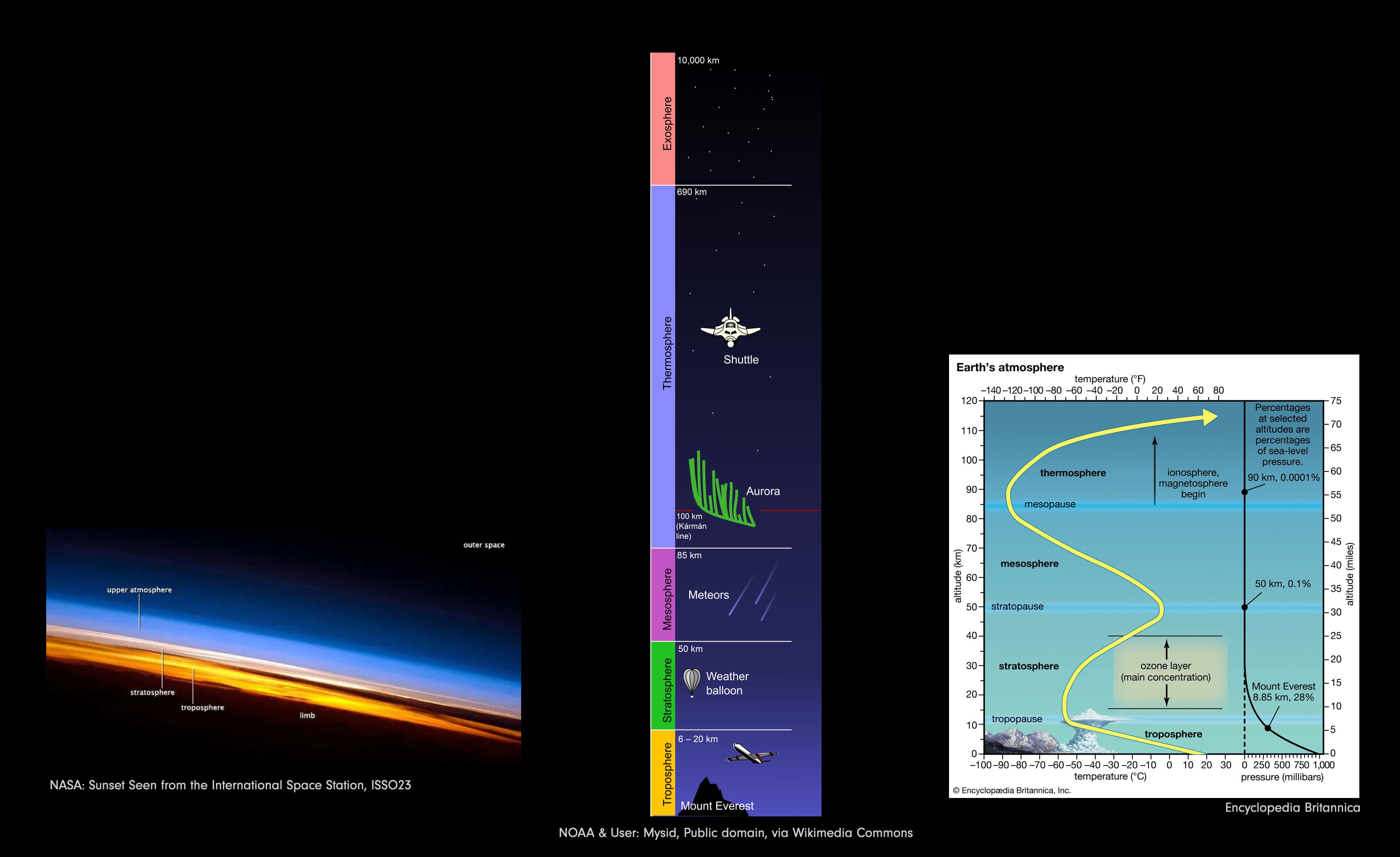
In my research I chose to focus on a layer of the atmosphere above Earth called the stratosphere. It’s a place where humans cannot go, at least not without special equipment.
The stratosphere is located above the habitable atmosphere, between earth and outer space. It starts at about 10 kilometers up and goes to around 50 kilometers high. The way people access it is by launching a large, plastic, helium-filled balloon and waiting on the ground to get it back.
I like thinking about this part of “near space” because it’s not fancy, like outer space. But lots of activity is happening there. People are sending up balloons to do experiments, weather prediction, and espionage. These balloons are launched all the time, all over the world.
SLIDE: BLANCHARD BALLOON DRAWING + JP AEROSPACE
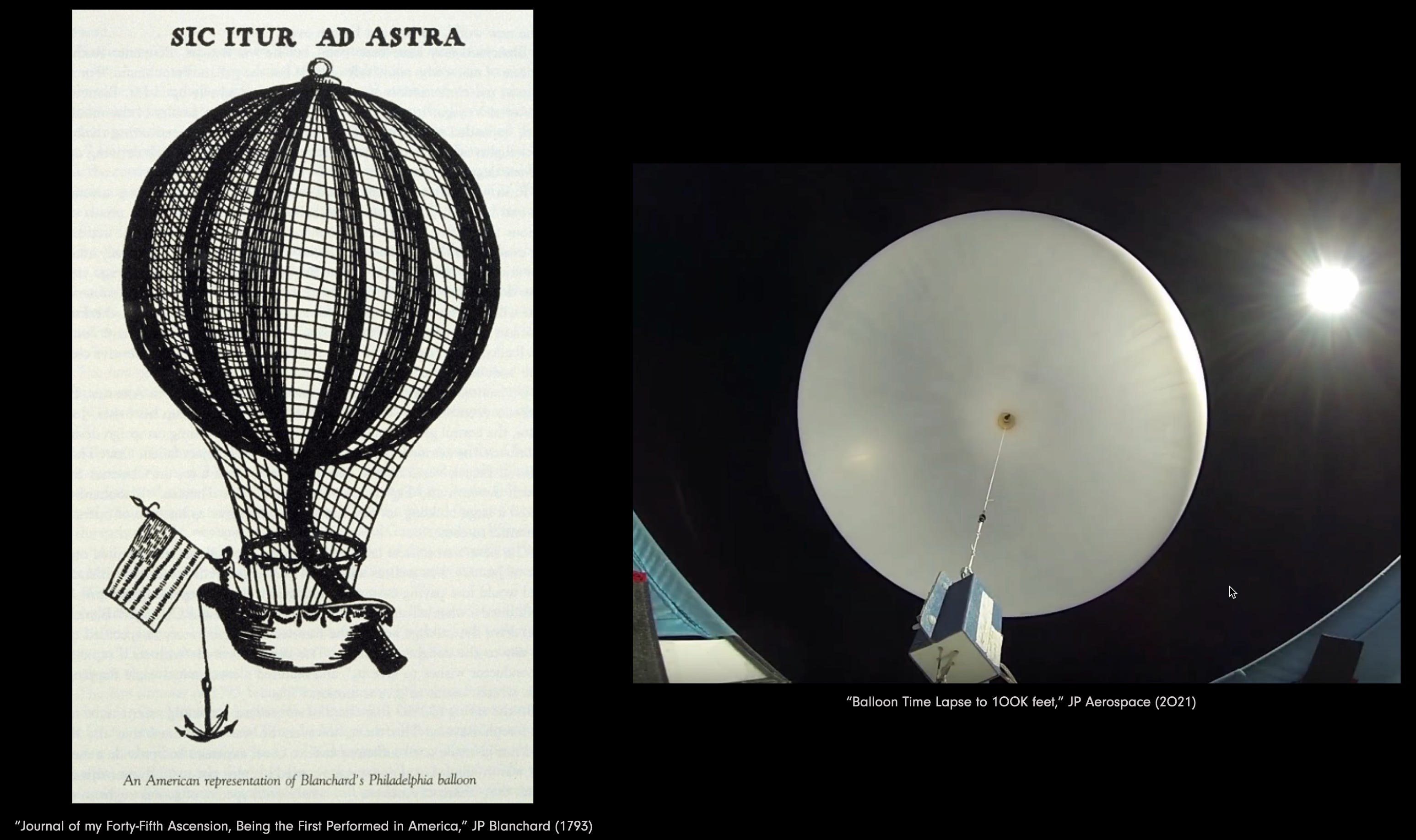
My research project connects investigations into historical and literary depictions of the invention of balloon flight in the 18th century in Europe and the U.S., together with ways 21st-century stratospheric space and balloon technology are described. As an artist, I ask questions about what lighter-than-air travel might have meant in the past, how the stratosphere is characterized now, what kinds of claims are made on this space, and I speculate on what, if anything, the stratosphere might be telling us here below.
SLIDE: PFAALL ILLUSTRATION
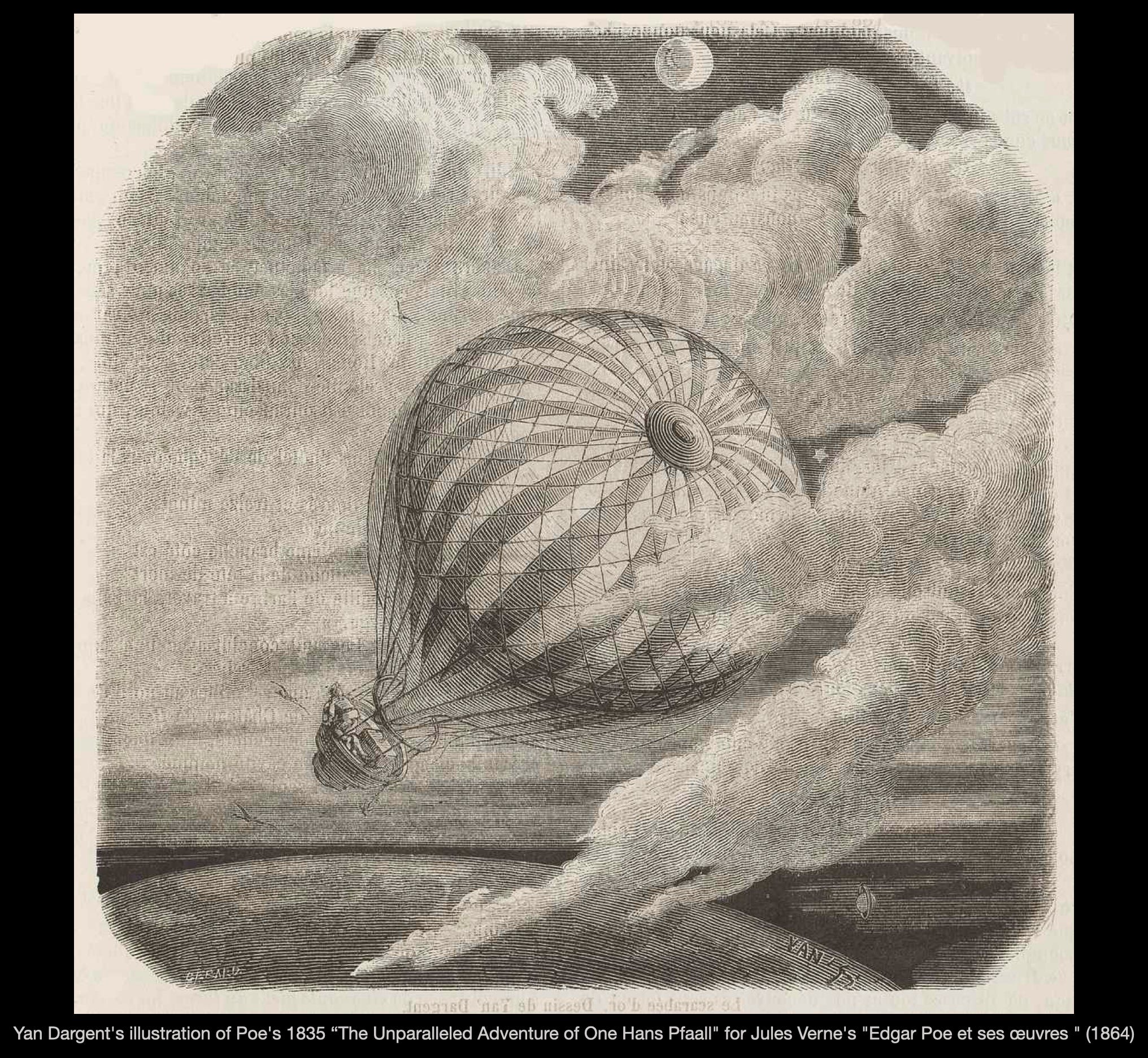
Throughout the process, I asked, where can imagination bring me? I imagine myself into the position of a balloon. I try to send myself back in time to sit with authors as they write their stories. I dream of being carried along by the winds. But I remain firmly here on the ground. The tools I use to transpose my ideas, imagination, and research are 16mm film, video, 19th-century photo techniques like the pinhole camera and the photogram, and nonfiction writing.
SLIDE: AIROPAIDIA STILL + BALDWIN MAP
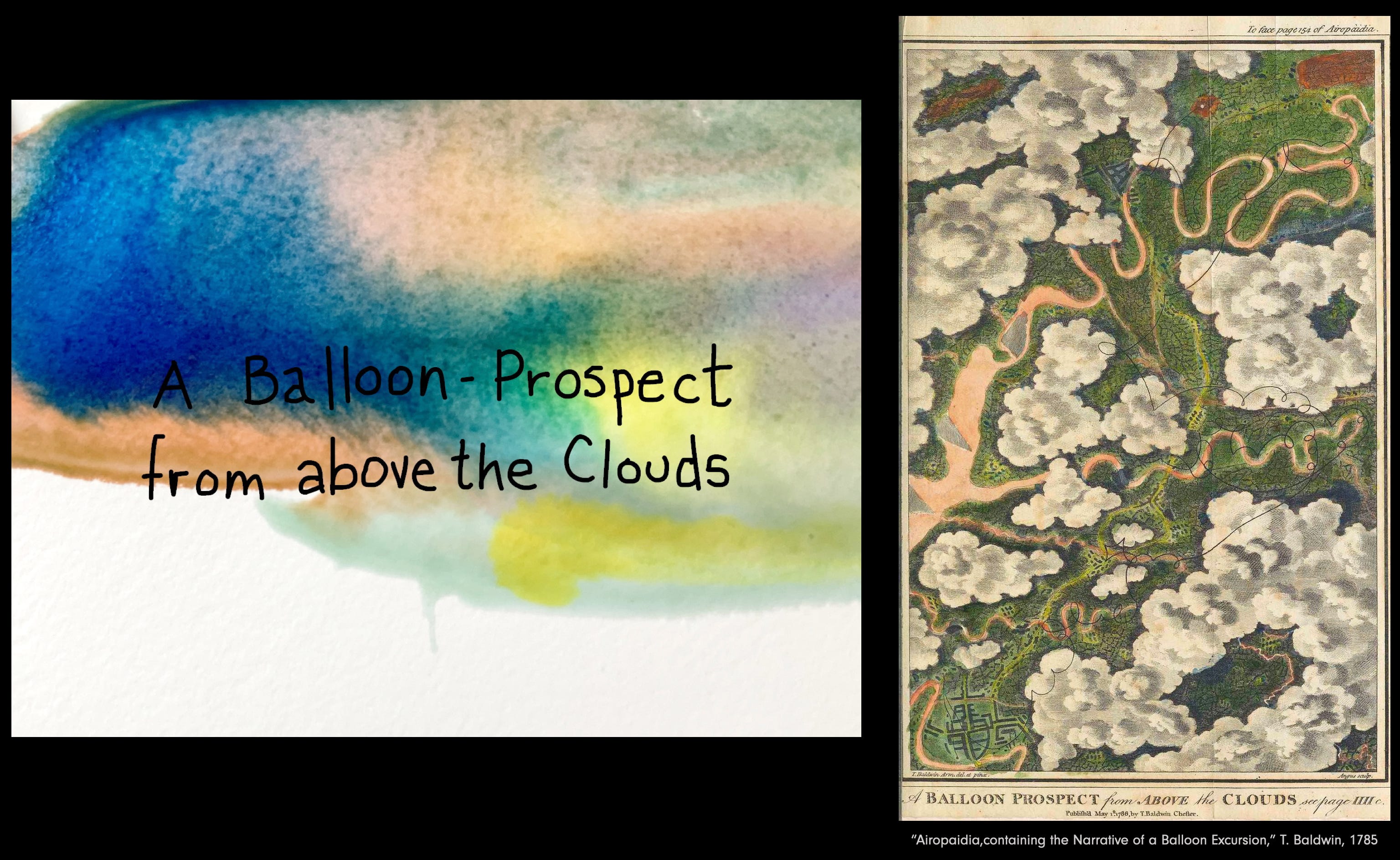
Eureka brings me to a space center in Arctic Sweden where scientists send experiments up on balloons. It inspires me to figure out how to put my own experiment near theirs. Eureka sends me to sites in the U.S. where the first balloon launched and landed in 1793. It carries me through studio practices drawing animations and to darkroom experiments right down the hall here at KHiO. Eureka’s exclamatory, imaginative power enables me to expand my research through the richness of combining visual artworks and the written word.
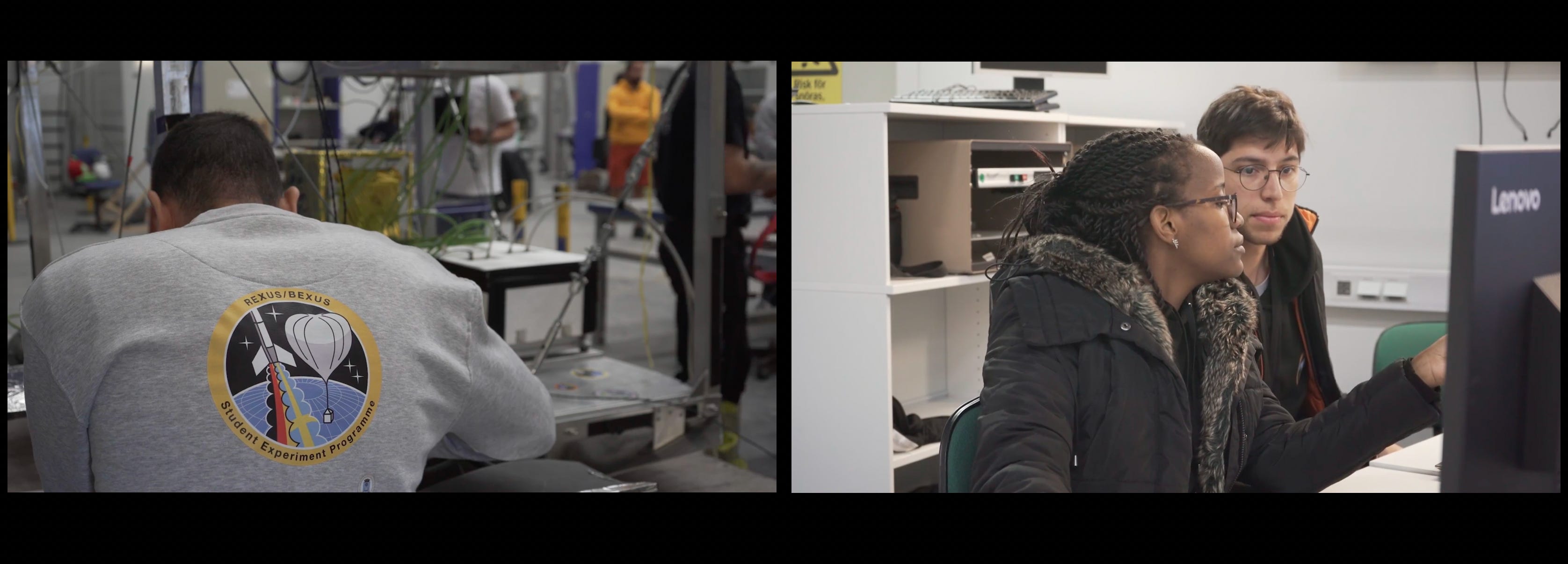
SLIDE: STILLS FROM BEXUS
Here, I’ll share a quote from Walter Benjamin:
The power of a country road when one is walking along it is different from the power it has when one is flying over it by airplane. In the same way, the power of a text when it is read is different from the power it has when it is copied out.
In my research, I try to get as close as possible to the metaphor and state of production that Benjamin describes here. I “walk along” all kinds of texts, written, visual, and experiential, as physical paths, to spend time with and to respond to them in different ways. I don’t “fly over,” so to speak, reading for an overarching narrative that can answer all my questions at once. I work with material from areas including history of science, literature, geography, film, and visual art. Each offers a unique framework, new guidance, and signposts for my practice.
SLIDE: UNDETECTABLE PHOTOGRAM

I am compelled by the idea of misapprehension. To catch at or try to hold something, and to realize it’s not possible. In my research, I look for ways to explore how materials cannot hold the excess of their experience, how words and images fill to bursting and explode, letting shards and fragments fall. My creative work collects these, not to restore, renew, or compare, but to hold them as they are, in all their incomplete, imaginative pieces. The method I describe as holding in relation might offer generative resistance to disciplinary categories.
As an artist, I claim the space of imagination to draw out from these elements “the strange phosphorous of life,” as American poet William Carlos Williams put it. It is my intention to hold in relation the pieces and so-called “partial data” I gather.
SLIDE: LUMIERE NEXT TO THE BOX
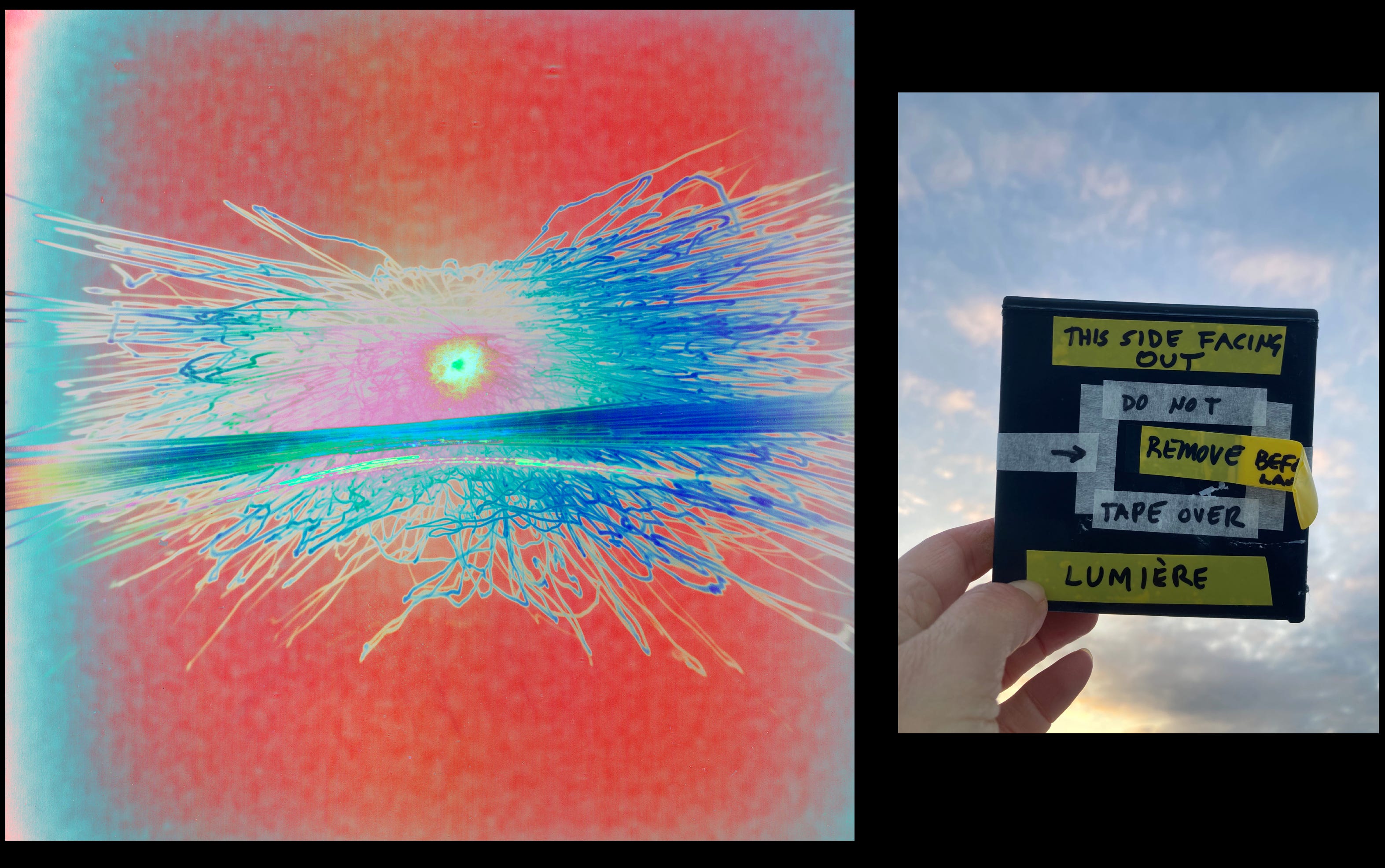
What you see here is an image resulting from my research. It’s produced by a handmade pinhole camera launched on a scientific balloon that traveled to 27 kilometers above the Earth and floated for about 4 hours. The total exposure was about 12 hours. I made it while doing field research in 2023 at the Esrange Space Center outside Kiruna, Sweden.
Next to it is a picture of the box that produced the image. It’s a 16mm film box that I made into a simple pinhole camera. It’s a camera, of course, but it’s also just a box.
There is no way to interpret the image made by my camera-box. It is a record of its own experience, received back on the ground. What was up there and what I hold correspond to each other but are not the same.
I don’t know how my box traveled, what light rays it gathered, what this image says or shows. I misapprehend it, and have to hold it as is, like a hoped-for letter, an indecipherable correspondence that has come back to me.
These images transform my desire for narrative closure into something more introspective, more reflective. The process involves attentiveness, acceptance, and connection. I call this method and way of working holding in relation.
This means that I resist using the material to prove an already decided point. It means that bits and pieces of information will not be folded into a preconceived form. It means I commit to exploring what escape from expertise might allow.
Holding in relation means each encounter, experience, and result is part of an engagement on its own terms as much as possible, with reflection built into the process.
As scholar and filmmaker Trinh T. Minh-ha writes in her essay “Holes in the Sound Wall”:
One way of defining filmmaking is to say that it consists of entering into relations with things and people and making as many of these relations come into view/hearing as possible.
Holding in relation is a delicate space, eluding closure and requiring ethical commitment and care. I use this method on a macro level, in the research, in exhibition, and in the creation of the artistic results themselves.
SLIDE: WIP AIROPAIDIA PAINTING VIDEO
As time passed, I looked for more tools. I thought about how balloons move through the skies. A balloon can’t be steered; it drifts, moving and turning along currents of air.
By engaging methods related to a balloon’s drift, I gave myself permission to fully embrace interdisciplinary processes; to mix imagination, close reading, and active encounters with people and materials. In this way, I felt I could open space in my research between the pressures of literalism and the pull of romantic idealism.
Other terms and methods I use in my research are “misapprehension,” “encounter,” and “verisimilitude.” I’ll talk more about those as I go.
END OF PART 1
Thanks for reading.
P.S. If you want to see some of these works in real life, you can visit my exhibition The Wonder at the James Gallery, CUNY Graduate Center, 365 5th Avenue (between 34th and 35th Streets), NYC.
Upcoming events at the James Gallery as part of the exhibition:
Feb 3, time TBD. Launch of Issue 16 of The Hoosac Institute Journal.
Feb 11, 4pm. Screening of 16mm print of the film Happy are the Happy, directed by Sarah Jane Lapp and Jenny Perlin, (b/w, sound, 18:00, 1999). Q&A with co-directors.
Feb 24, 6:30pm. Screening of BUNKER. (HD, color, sound, 92 minutes, 2022). Q&A with director Jenny Perlin.