
Eureka Talk_23 Part 2
elements and explications

A recap of what’s going on here:
This is the second part of the talk I gave for my doctoral defense on November 18. As you can see from the title, it was version 23.
As part of my recent doctoral defense in Artistic Research at the Oslo National Academy of the Arts, I was to give a public 45 minute talk followed by questions from the committee and the audience. And answers from me.
So this is part 2. I’m posting it so it can be public and not just hidden away on a hard drive and a library archive. I’ll be posting the final part tomorrow, the last day of 2025.
EUREKA TALK PART 2
SLIDE: INSTALL EXHIBITION ENTRANCE
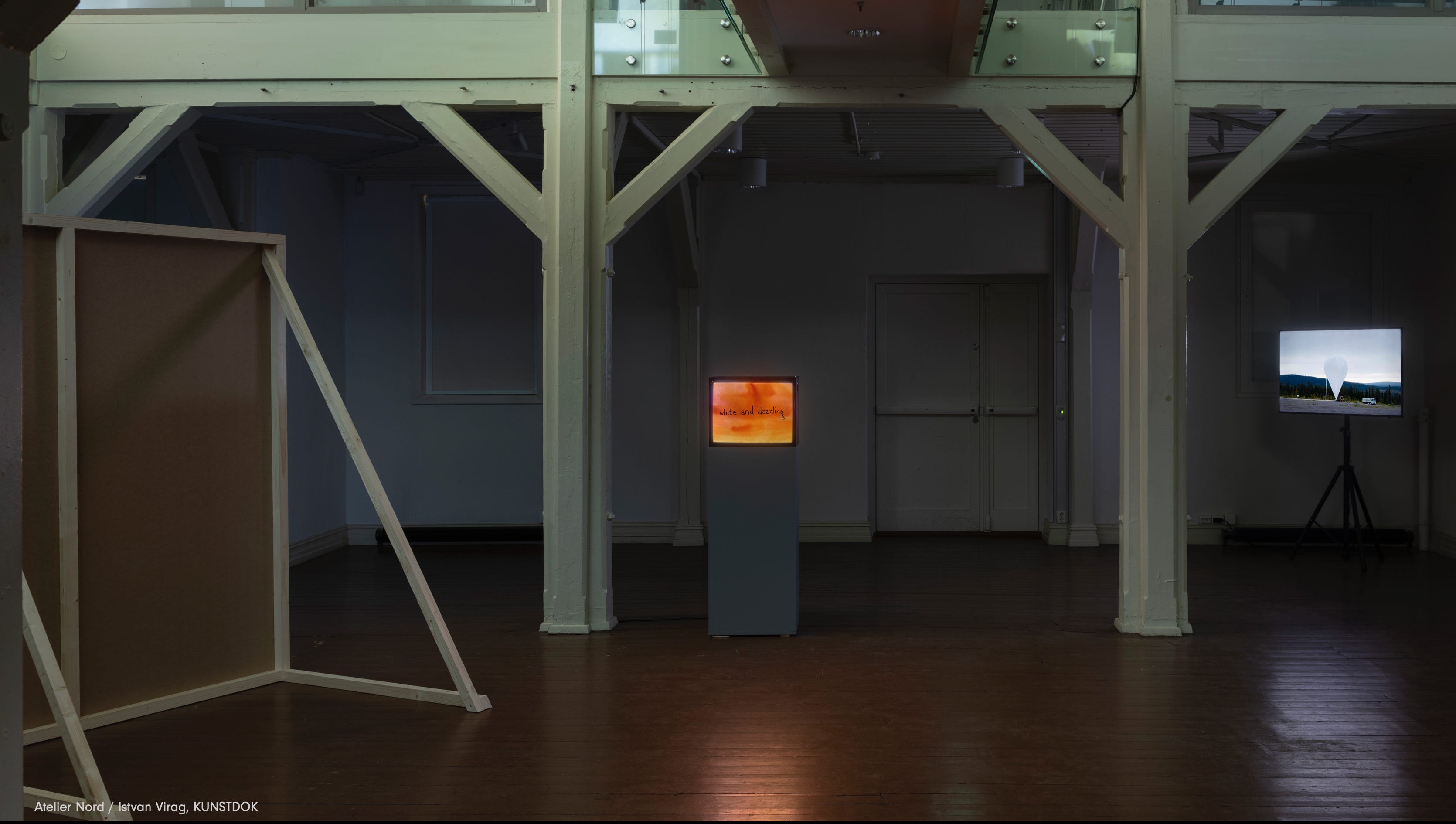
Here are some images of my doctoral exhibition at Atelier Nord. This space used to be a church. There are five films and one photograph in the installation. Here you can see the animation Airopaidia at the entrance, referring to an 18th-century account of a balloon flight. It invites you in with its brightly painted colors and hand-drawn moving text. The Wonder is in the corner. Here, a 21st-century balloon sits on a gravel expanse, launching when you least expect it. Experiments is on the large freestanding wall. You can’t see it when you enter, you just hear its soundtrack filling the gallery, sounds of people laughing, music, hammers, trucks, chatter, applause.
SHOW EXPERIMENTS INSTALL SHOT
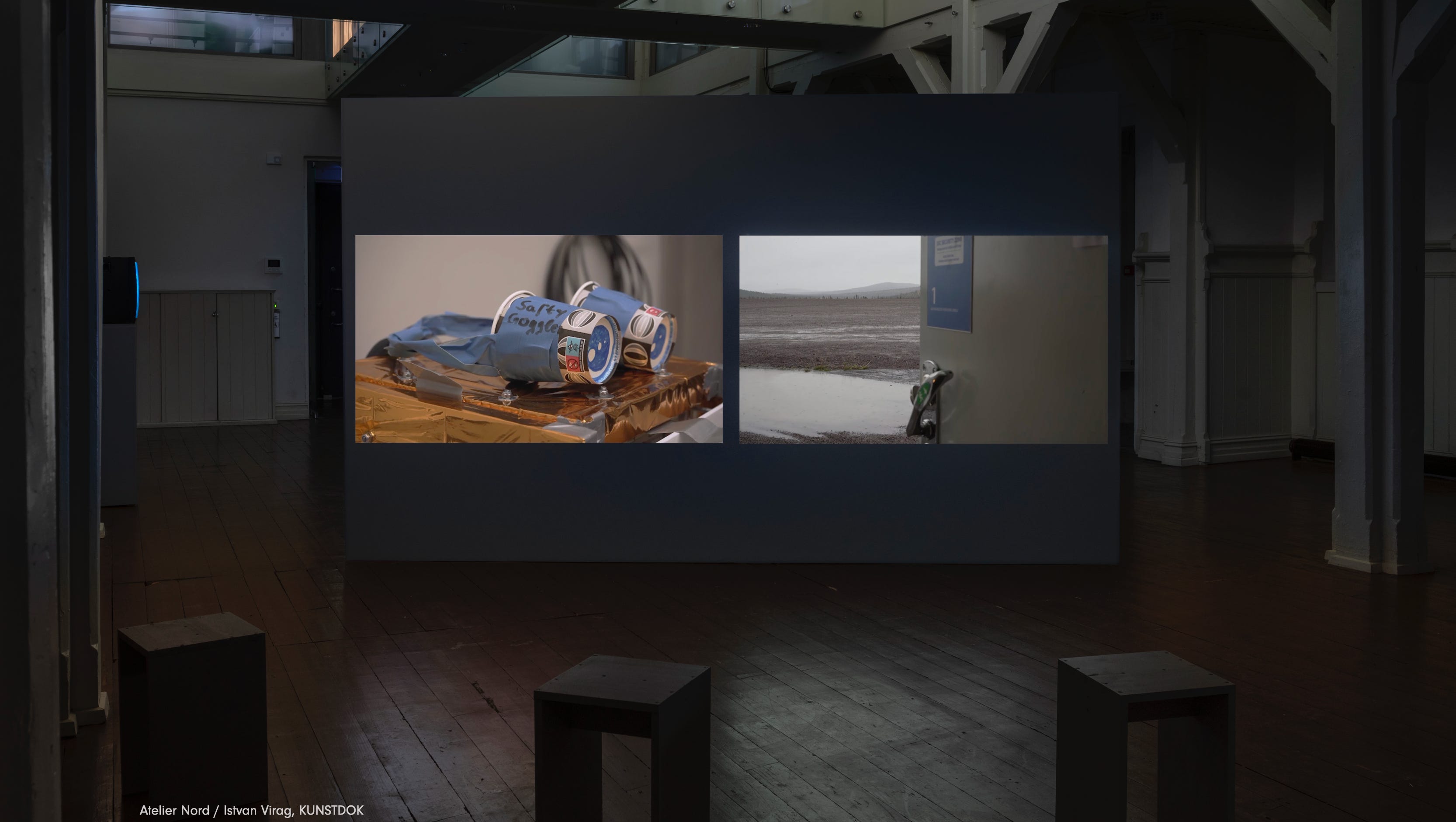
When you turn the corner, it’s right there next to you.
SLIDE: INSTALL SHOTS OF A LANDING AND LETTER WITH LUMIERE
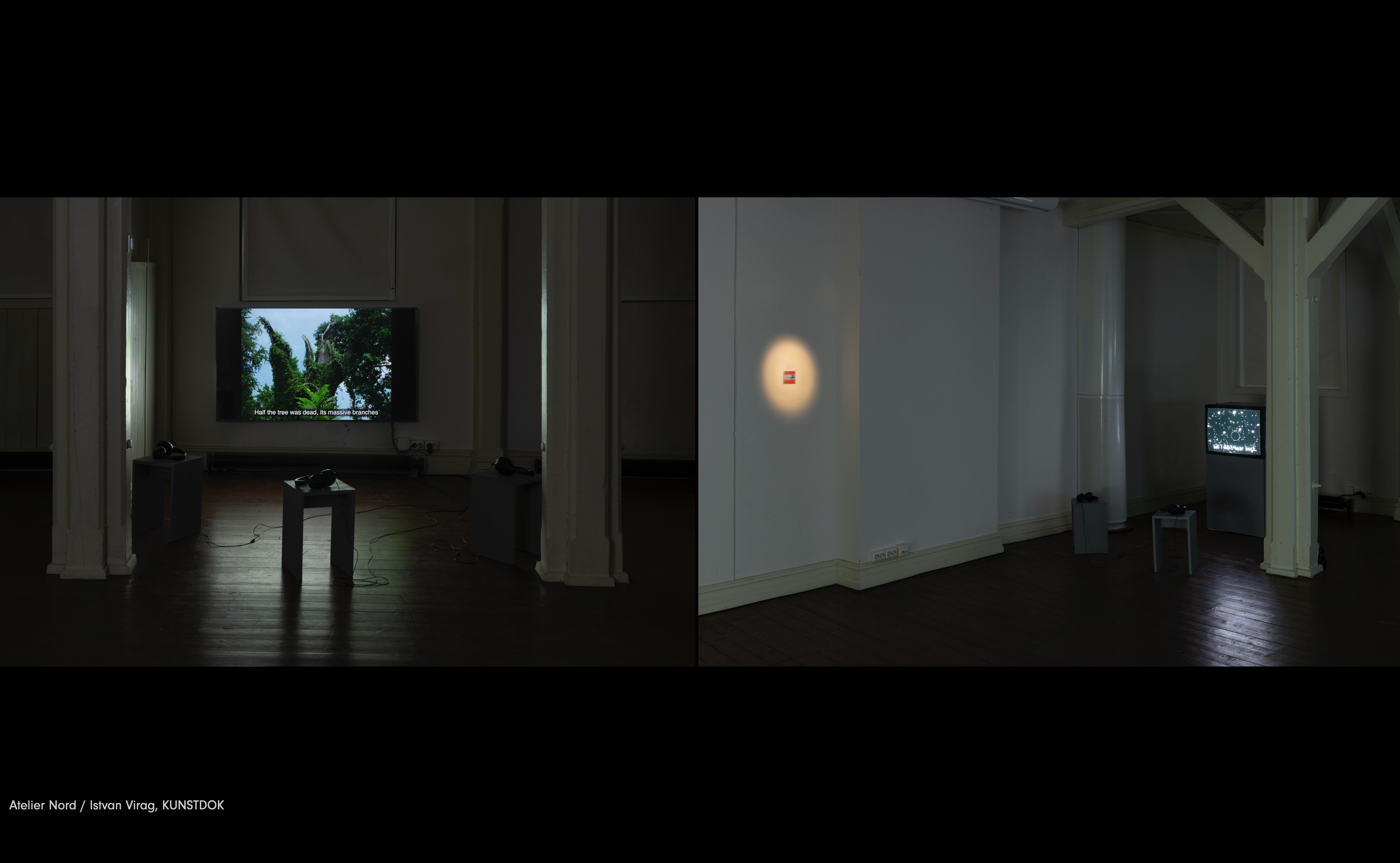
Tucked into the gallery’s former church naves are A Landing and Letter, set in more intimate spaces to sit and read the text on screen. On the back wall, where the church altar once was, is the unframed, mysterious, tiny pinhole photograph Lumiere.
So let’s look a couple of things more closely.
I’ll focus on two pieces here, EXPERIMENTS and A LANDING.
SLIDE: LOON BALLOON
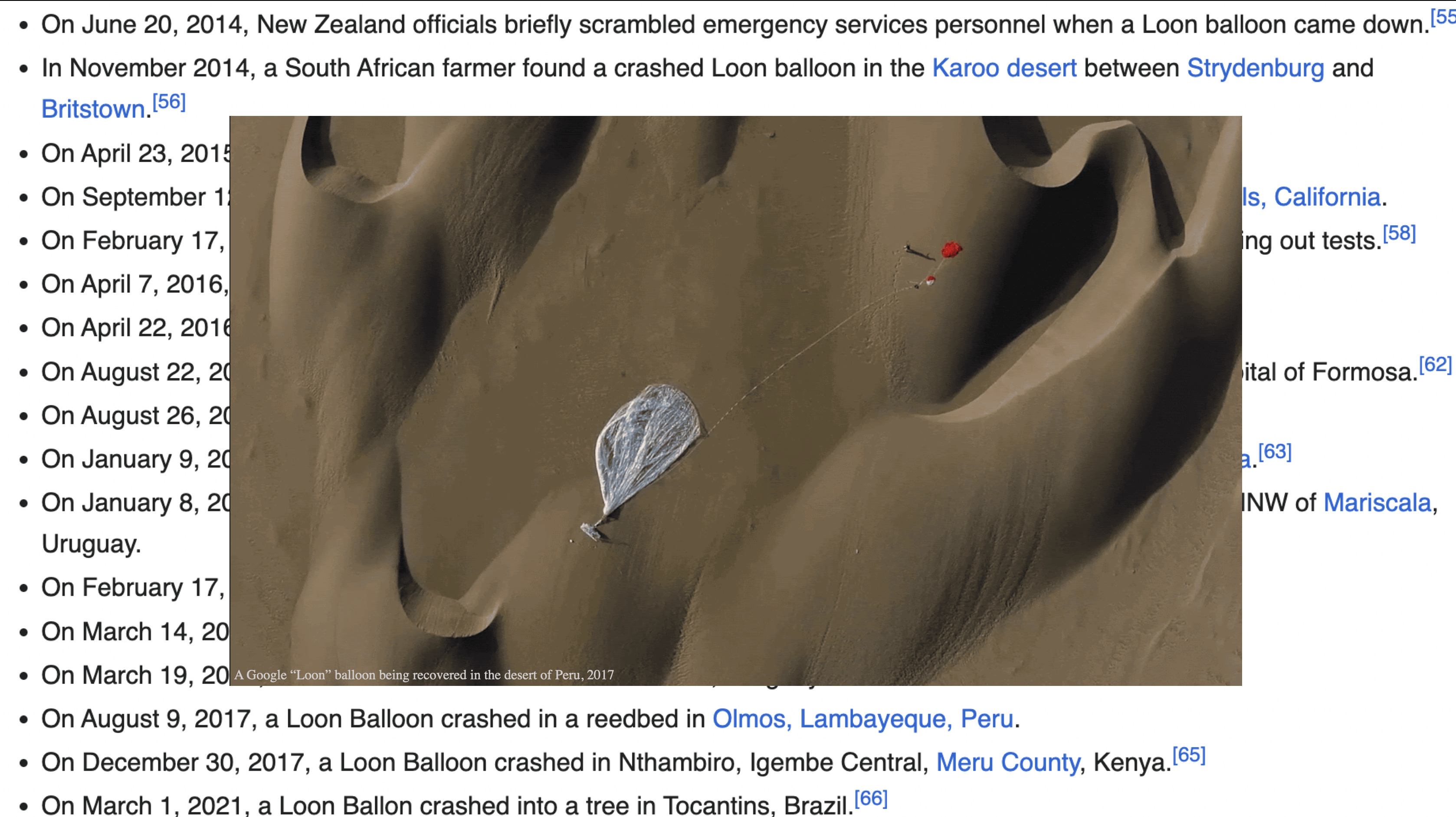
During the early phases of research, I interviewed scientists busy with the stratosphere and the balloon technology developed to get there. I talked with engineers, atmospheric chemists, climate scientists, and tech entrepreneurs.
I was fascinated by stories about Google’s failed nine-year attempt to create a balloon that could stay up in the stratosphere without ever bursting and falling back to earth. Google had wanted to fill the whole stratosphere with these balloons, but never managed to make it work. The conditions up there made it impossible for the corporation to take it over. But people keep trying.
SLIDE: UNDETECTABLE EMPTY
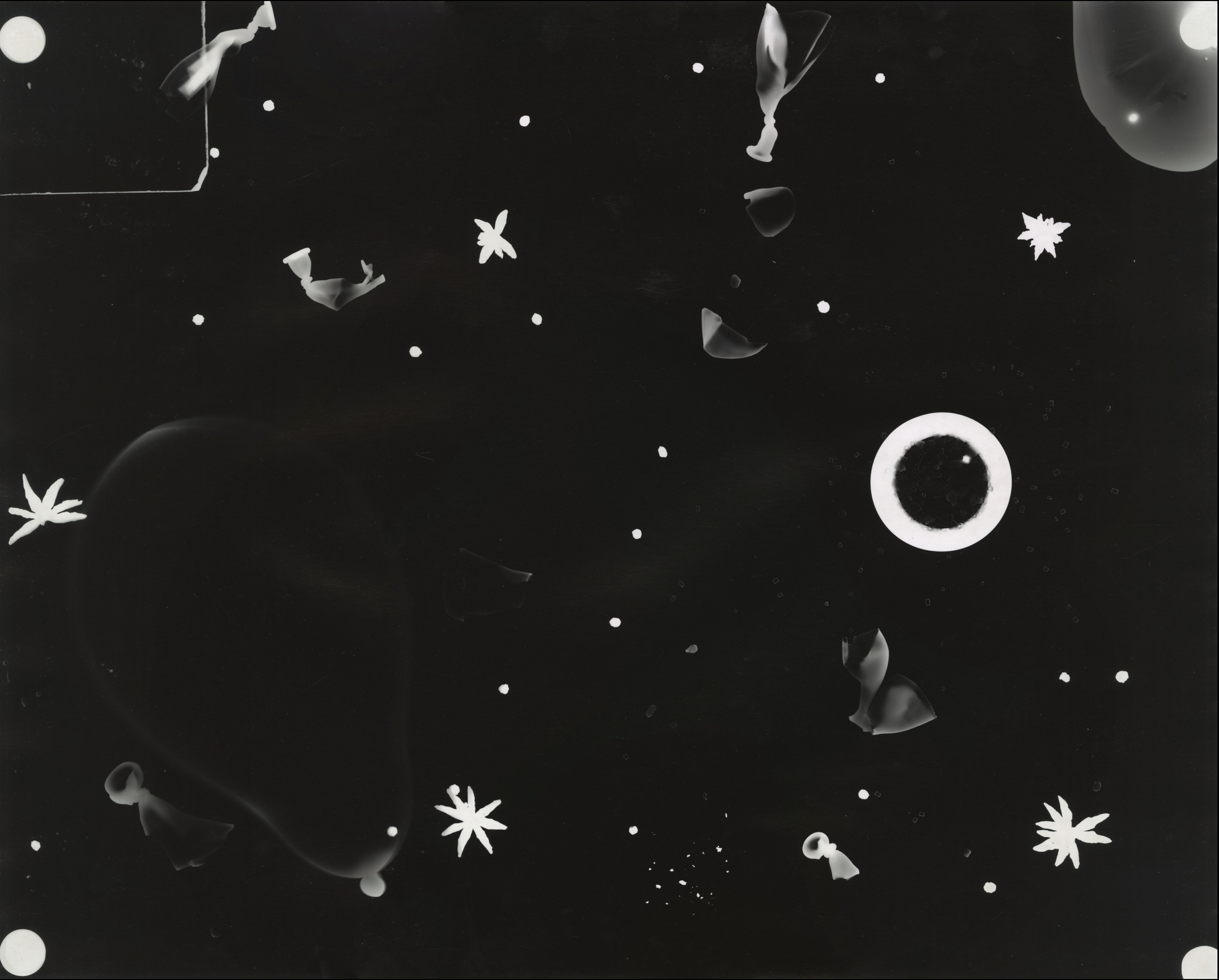
In all my conversations and research, the stratosphere was described as dark, freezing, and uninhabitable. It’s a space with its own ecosystem, the scientists told me, and yes, it’s affected by human activity, but it’s also independent, powerful, and unpredictable. But humans need the stratosphere. It holds the ozone layer that protects Earth from solar radiation. Without the stratosphere, we’d be fried.
The scientists I interviewed talked about the stratosphere as something up there, to be used for things like weather prediction, pollution testing, climate management, surveillance, and data gathering.
SLIDE: ANOTHER UNDETECTABLE
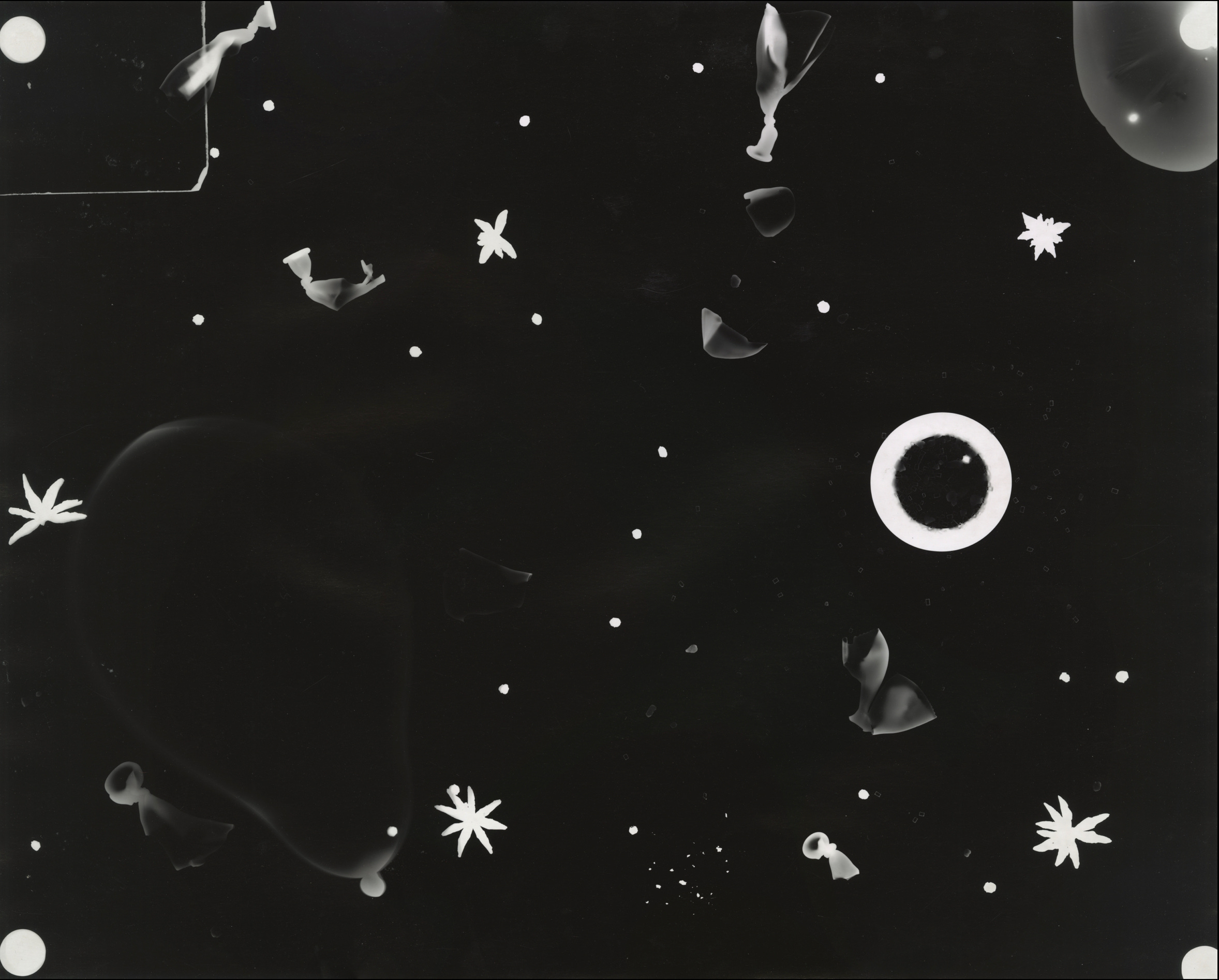
I tried to envision this space that had been narrated as devoid of life, yet full of invisible elements and useful data. I made a series of photograms in the darkroom. Those images, called Undetectable, later became material for a film I called Letter.
Photograms are cameraless images made by placing objects on photosensitive paper and processing them in darkroom chemistry. I made these using my hands and everyday household items like salt, sugar, pepper, along with party balloons, glass slides, light bulbs, and string.
SHOW FIRST EMAILS TO AND FROM ARMELLE
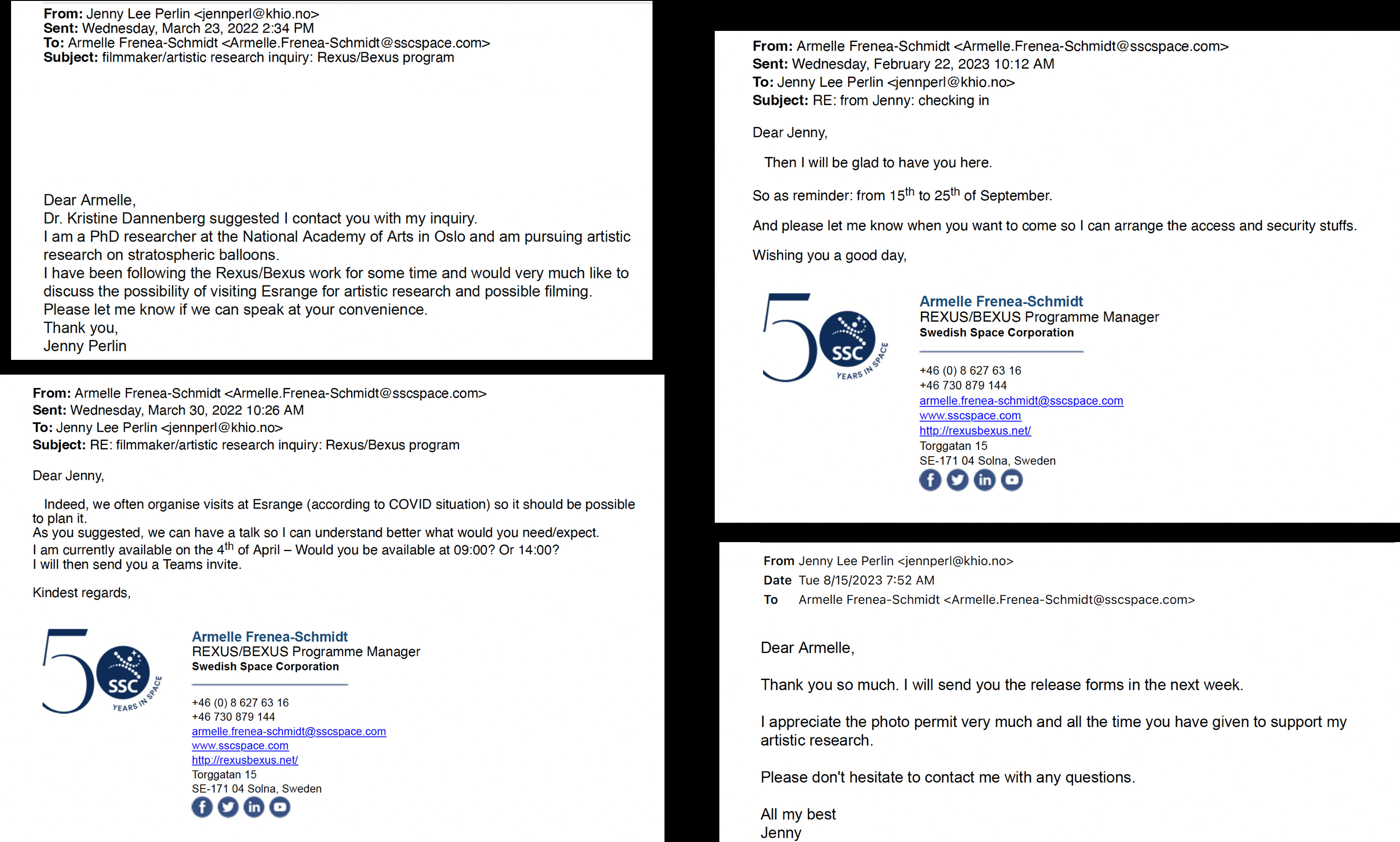
At the same time, I had been reading about an EU student scientific balloon program called BEXUS at the Esrange Space Center outside Kiruna, Sweden. I thought, you know, I’m kind of a student too, let me give it a try. So, I sent an email to info@swedish space corporation and explained my project.
A week later I heard back from Armelle Frenea-Schmidt, who at the time led the program. After many conversations, Armelle invited me to travel to Esrange and conduct my research alongside the student scientists. I went first in 2022 to film a non-student launch, and in 2023, I returned to Esrange to film the students at work. I spent about 10 days each time, living on site along with the staff, team, and scientists.
The BEXUS program is competitive and requires at least two years of work before eight teams of students arrive at the space center. Once there, they work day and night to finalize their experiments, put them in boxes, and watch them launch to the stratosphere. Their boxes are sealed, protected from radiation, cold, and moisture, and as they float, they transmit data to the scientists’ computers below.
SHOW EXCERPT FROM EXPERIMENTS (SILENT)
So what are we looking at? These are some excerpts from Experiments. I’ve turned off the sound here and will describe as these excerpts play.
EXPERIMENTS is a 23-minute two-channel video projection with sound. It has a loose structure that follows the days the student teams are working. The teams come from different universities across Europe, from Switzerland to Spain to Poland and more. They design their own stickers, logos, matching sweatshirts. They spend their time finalizing their experiments, or at the space center hotel, game room or cafeteria.
When I arrived at Esrange to film, I was fascinated with the wilderness that spread out around the space center. I filmed it for hours. I was also obsessed with the scientists’ activities, not only their labor, but their groups, down time, rivalries, competitions, seriousness and play.
The video almost never shows the scientists outside. They stay in the workshop, focused on their boxes. The launches are shown on a separate video, The Wonder.
In Experiments, while you never see the launch, you see evidence of its success, through applause, and scientists jumping around happily, and on computer screens. The “star” is Armelle Frenea-Schmidt, the French rocket engineer whose job it was to guide the students through the two-year process.
The two channels of Experiments switch back and forth based roughly on time passing through the week. The second channel shows the launch pad and landscape. A landscape of romantic projection. But it is a charged and contested space. The image contains invisible geopolitical borders, ravaged forest and earth, disrupted reindeer herding tracks, misused lands, bunkers to hide in if rocket debris falls from the sky.
The changing weather around Esrange can make it impossible for the balloon to launch. If the atmosphere doesn’t “cooperate,” the scientists have to wait. Both land and sky show their quiet influence in this work.
I filmed, recorded, and edited Experiments alone. The consumer video camera I use is another box that connected me to the young scientists, who were excited to discuss lenses and sensors. My camera box translates light and sound into digital images. These images give the impression of being real, like the piece’s editing gives the impression of being a documentary.
Using this camera and being present in the space, I worked in relation with the scientists. Arriving at the site, I felt the desire to impose my artistic vision on their scientific projects. I kept telling them what they were doing “looked like art.” But this was my misapprehension. I was there doing my research; it was not useful to theirs. We were engaged in encounters, and our work lived in relation.
The way Experiments is shot and edited corresponds to a term I use in my writing, verisimilitude. It might be useful to explain it here.
SHOW SLIDE WITH THIS DEFINITION TOGETHER WITH THE REST OF VIDEO
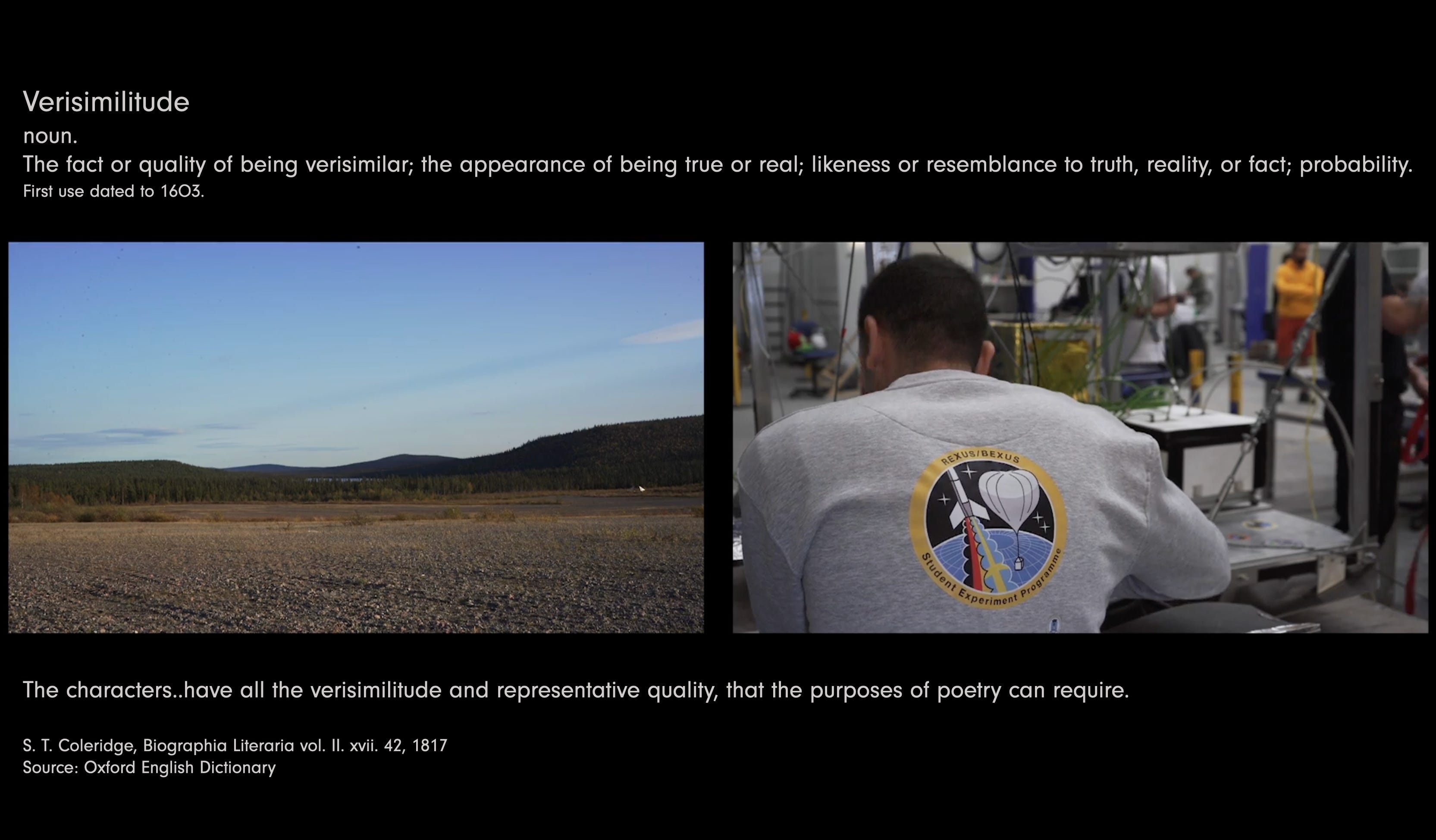
Verisimilitude
Noun: The fact or quality of being verisimilar; the appearance of being true or real; likeness or resemblance to truth, reality, or fact; probability.
I began incorporating the term during the last phase of the research process. I’m working with it as it relates to historian of science John Tresch’s scholarship about the work of Edgar Allan Poe and what Poe called “the potent magic of verisimilitude.”
Verisimilitude is not a replacement for truthful representation; it is something else. In my use, it’s a term that allows hoax, humor, fantasy and imagination to complicate a regime of truth-claims. The presence of things that appear scientifically accurate can support wider, wilder imaginative expression precisely because a base of apparently grounded material forms their foundation.
SLIDE: ILLUSTRATION FROM PFAALL
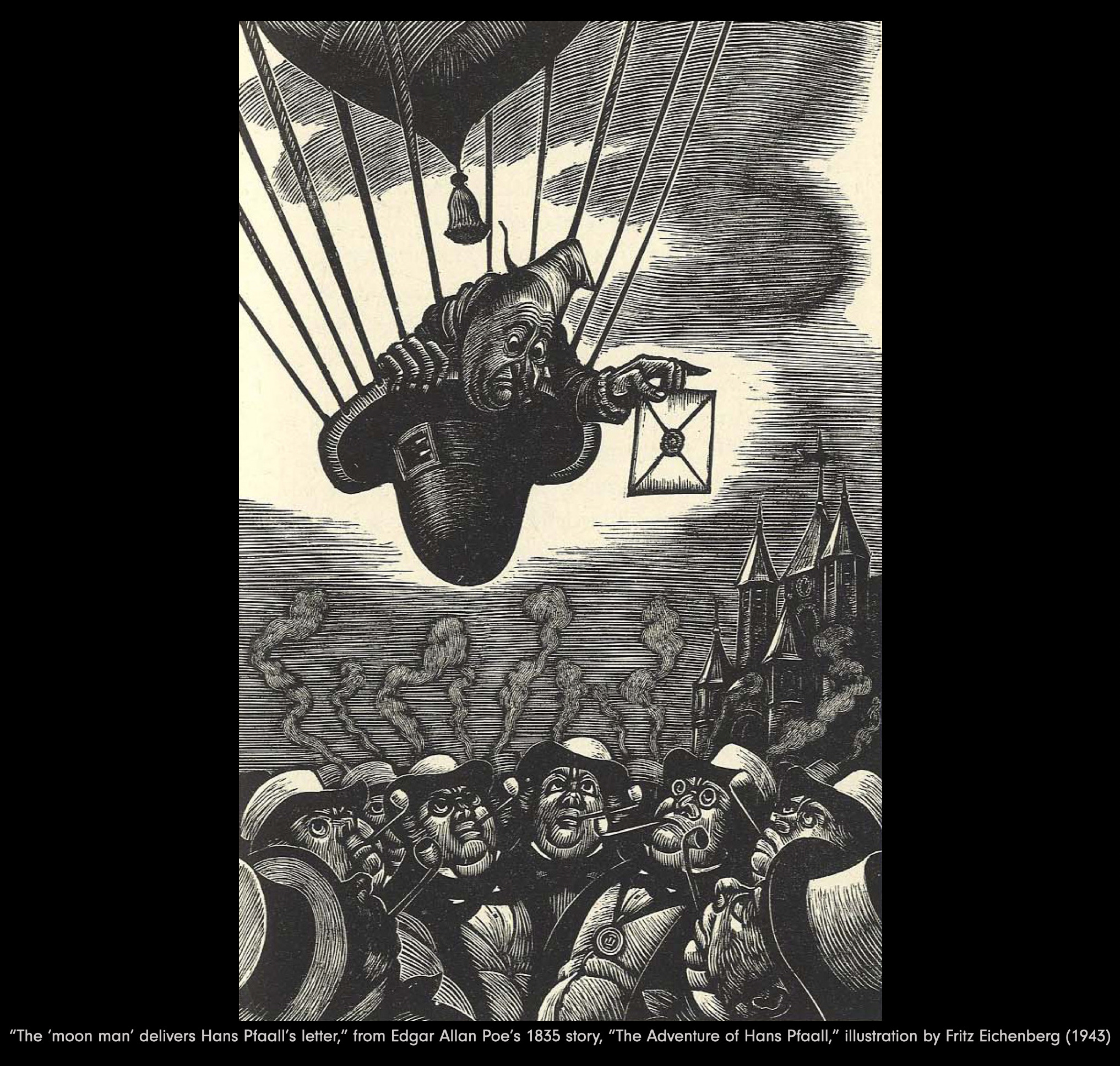
Besides the essay Eureka I mentioned previously, another essential text for my research, also by Edgar Allan Poe, is an 1835 short story called “The Unparalleled Adventures of One Hans Pfaall,” a wild tale, written in the form of a letter, mixing imagination, and scientific fact to describe the poor but genius inventor Hans Pfaall’s balloon flight from Rotterdam all the way to the moon.
Poe writes detailed, scientifically accurate texts in the construction of his fictions. He knows that making things appear real is what makes the impossible possible and that a reader’s experience of the cracks between real and fictional is where the art lies. In applying scientific principles to the imagination, Poe brings story into being.
In my own research, I consider verisimilitude a device that supports speculation, imagination, and play. My use of documentary strategies and consumer video cameras in the research results engages this term.
SHOW LUMIERE AND MELIES BOXES VIDEO EXCERPT
While preparing to film at Esrange in 2023, I asked if I could put my own experiment on the balloon. But what kind of experiment should it be? Through research and correspondence, I learned about solargraphy, long-exposure pinhole photography. I built a camera from a 16mm film box. And I took a second box, put unexposed film in it, and sealed it.
SLIDE: MY BOXES ON CART BEFORE AND AFTER LAUNCH
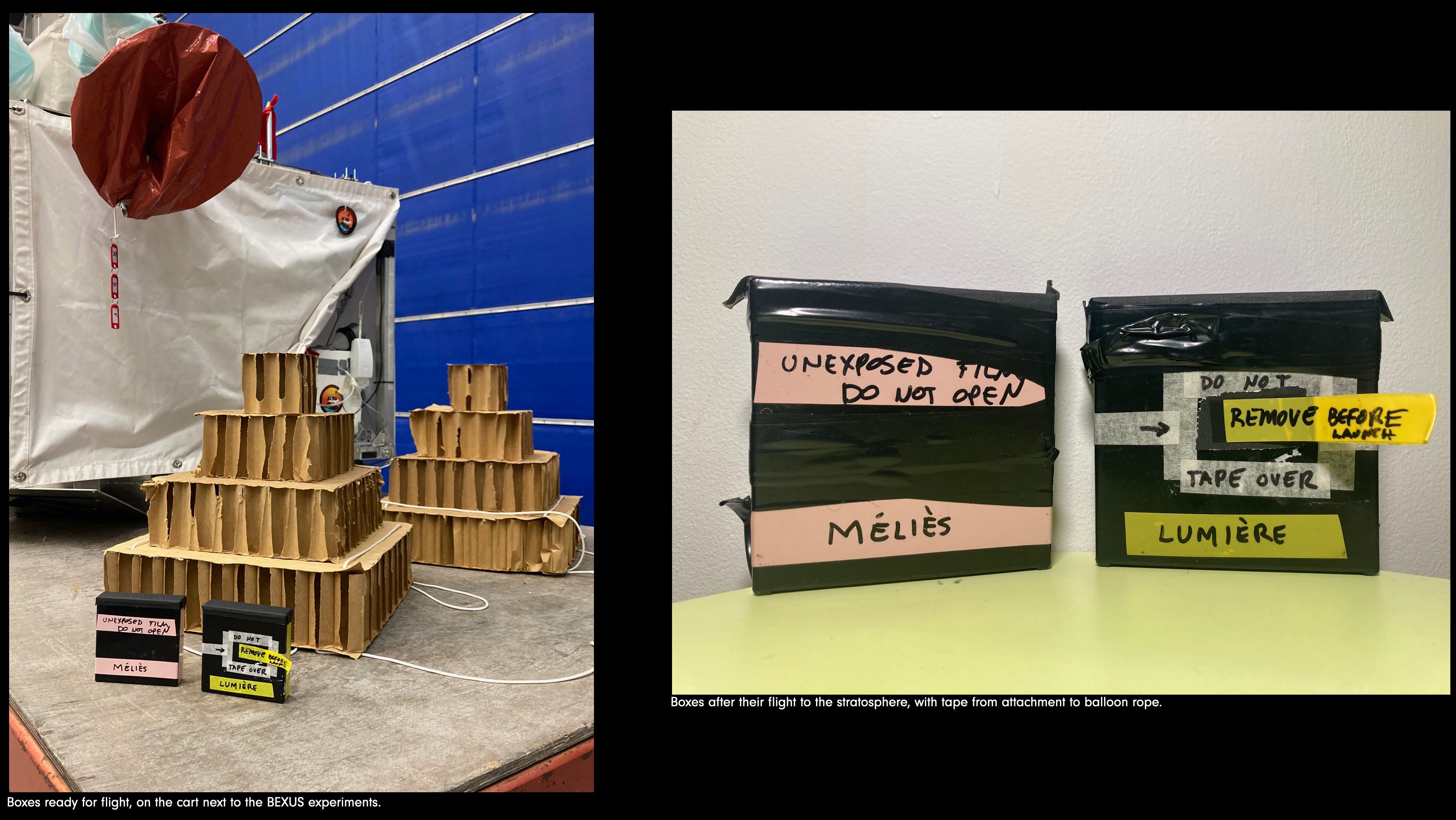
My boxes were not allowed to be on the structure used for the official experiments. Instead, just before the 5am launch, a technician taped my boxes to the rope between the “real” experiments and the balloon. Kind of like tying the note to the balloon string as a kid. My boxes offered a correspondence with science but I had no hypothesis, no control, no tools of transmission.
I didn’t expect anything to come back and was overjoyed when my box camera revealed an image. As I mentioned before, what that image shows, what meaning or data it produced, is totally unclear. It corresponds to its experience but is uninterpretable.
Correspondence is an essential part of my artistic research. I use this term in several ways in my writing and in my visual work. Correspondence appears as exchange, letters, emails, phone calls, and in fantastical, dream-like ways that relate more to 19th-century French writer Charles Baudelaire’s poem of the same name.
SLIDE: STOOLS, WONDER, AND EXPERIMENTS
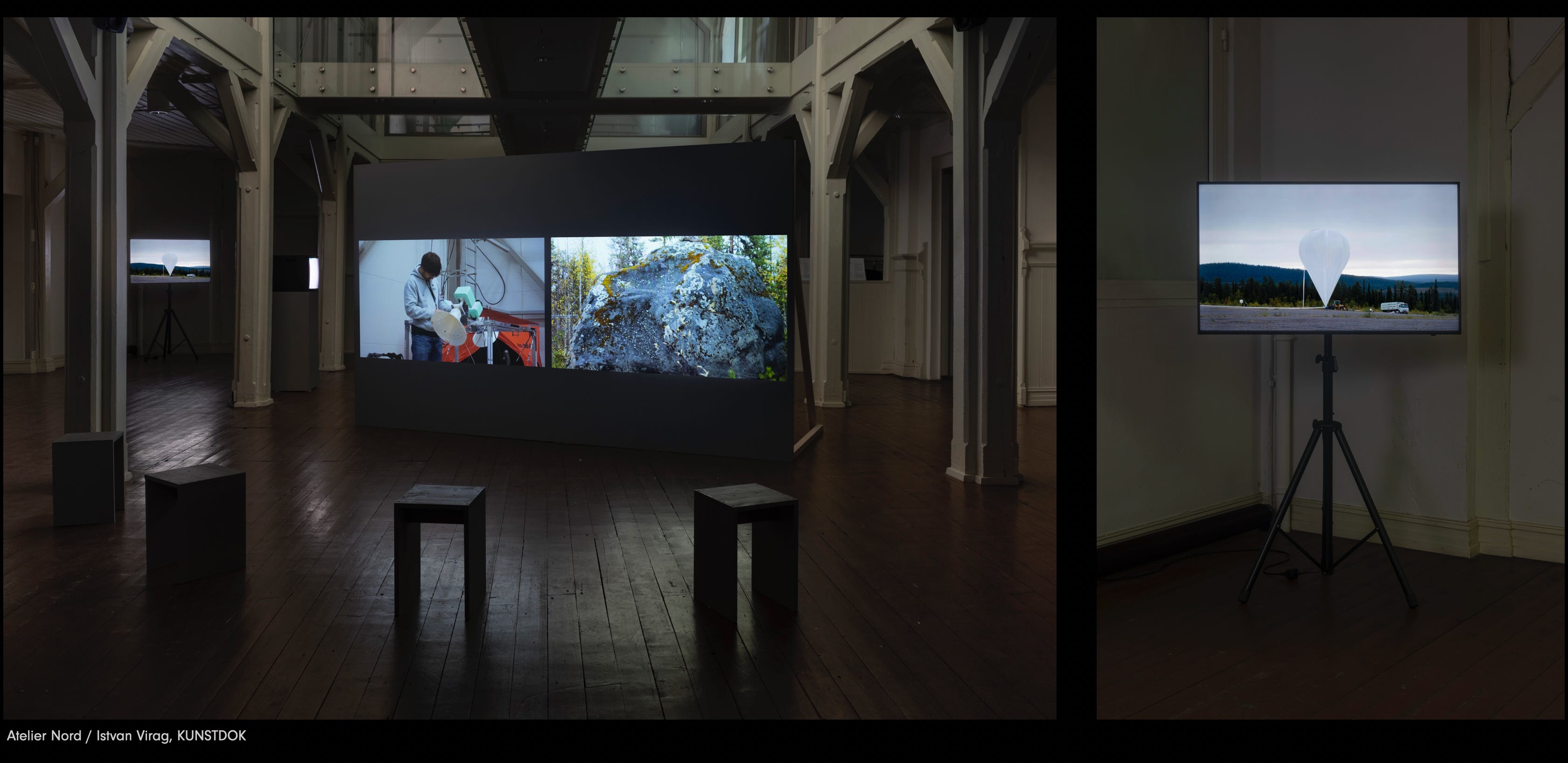
In front of the two-channel projection, there are small stools that correspond to the boxes the scientists are working on in the video. Designed and built by Jonas Adolfsen, these seats let you watch Experiments while keeping your eye on The Wonder, the balloon waiting to take off in the corner of the gallery.
You can’t watch both at the same time, but you try. It’s an absurd, frustrating, funny exercise: the balloon doesn’t seem to do anything; you turn your attention to the scientists, you miss the balloon launch again. While you try to access one kind of information, another one slips your grasp.
END OF PART 2
Thanks for reading.
P.S. If you want to see some of these works in real life, you can visit my exhibition The Wonder at the James Gallery, CUNY Graduate Center, 365 5th Avenue (between 34th and 35th Streets), NYC.
Upcoming events at the James Gallery as part of the exhibition:
Feb 3, time TBD. Launch of Issue 16 of The Hoosac Institute Journal.
Feb 11, 4pm. Screening of 16mm print of the film Happy are the Happy, directed by Sarah Jane Lapp and Jenny Perlin, (b/w, sound, 18:00, 1999). Q&A with co-directors.
Feb 24, 6:30pm. Screening of BUNKER. (HD, color, sound, 92 minutes, 2022). Q&A with director Jenny Perlin.